
-
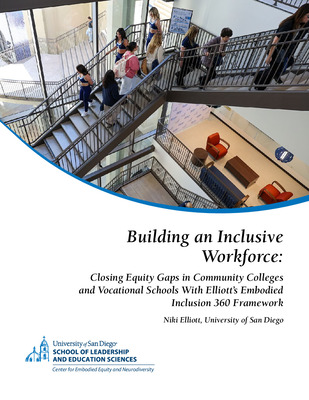
Building an Inclusive Workforce: Closing Equity Gaps in Community Colleges and Vocational Schools With Elliott’s Embodied Inclusion 360 Framework
Niki Elliott Ph.D.
Community colleges and vocational schools serve as critical access points to higher education and upward mobility, yet historically marginalized neurodiverse students—particularly men of color—continue to face inequitable outcomes in retention, completion, and career readiness. Despite rising enrollment in career and technical education programs and increasing workforce demand, institutional practices often rely on fragmented supports that overlook the interplay of physiology, environment, culture, trauma, and instructional design. Closing these equity gaps requires a holistic, embodied approach informed by neuroscience, trauma studies, and culturally responsive pedagogy. Elliott’s Embodied Inclusion 360 (EI 360) Framework offers such a model, integrating five interdependent domains—physiological, relational, environmental, instructional, and transcendental—to address the full spectrum of learners’ needs. Through application of EI 360 within the I C.A.N. (Increasing Career Access through Neurodiversity) initiative, community colleges and vocational programs can transform into engines of inclusion, cultivating belonging, reducing structural barriers, and leveraging neurodiverse strengths as drivers of innovation, persistence, and workforce opportunity.
-
Building an Inclusive Workforce: Closing Equity Gaps in Community Colleges and Vocational Schools With Elliott’s Embodied Inclusion 360 Framework Plain Language Summary
Niki Elliott Ph.D.
This paper explains why community colleges and vocational schools need to do more to support students who are neurodiverse (such as students with ADHD, autism, dyslexia, or mental health conditions), especially students of color and men of color. Community colleges and vocational schools serve millions of students and are often the main path to good-paying jobs in the skilled trades. However, many students who enroll, especially students with disabilities and students of color, do not complete their programs. The article argues that schools must move beyond basic disability accommodations and instead redesign how they teach, support, and structure learning environments.
-
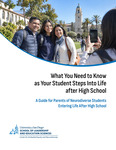
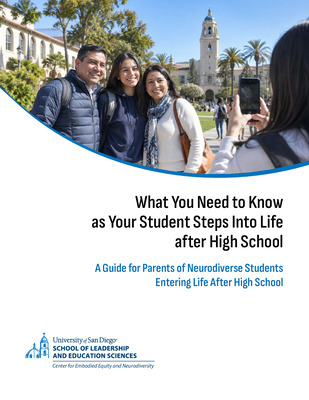
Guide for Parents of Neurodiverse Students Entering Life After High School
Niki Elliott Ph.D. and Sylvia Mac Ph.D.
Sending your student into the next chapter is a big moment, for them and for you. This guide gives you the practical information you need: what changes legally and structurally once your student turns 18, how the accommodation process works in postsecondary settings, what you can do now to set your student up for success, and how to stay genuinely connected and supportive through the transition. Whether your student is heading to a four-year university, a community college, a trade or vocational program, or a certification pathway, the information here applies.
-
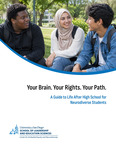
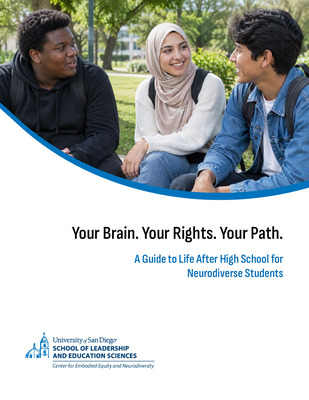
Guide to Life After High School for Neurodiverse Students
Niki Elliott Ph.D. and Sylvia Mac Ph.D.
Many neurodiverse students arrive at the next chapter of their lives carrying more information about what is difficult for them than what makes them extraordinary. This guide is about knowing your brain deeply, understanding what you need, and building a life after high school that actually works for you. Whether you are heading to a four-year university, a community college, a trade or vocational program, or a certification pathway, your neurotype is an asset. This is your opportunity to design a life around your strengths.
-
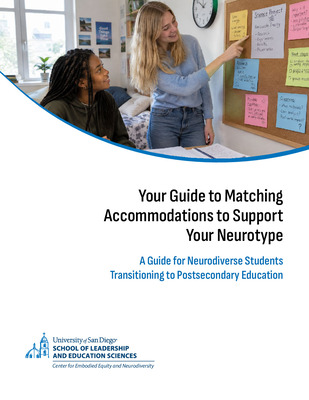
Guide to Matching Accommodations to Support Neurotypes
Niki Elliott Ph.D. and Sylvia Mac Ph.D.
Understanding which accommodations match your specific neurotype is one of the most powerful tools you have. This guide helps you connect each area of executive functioning to the accommodations you can ask for and the strategies and tools you can use yourself.
-
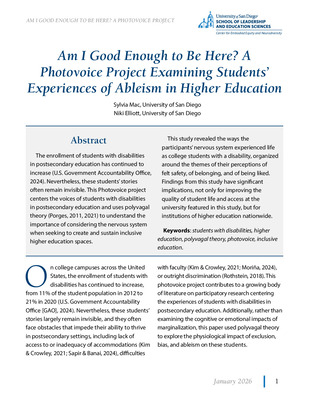
Am I Good Enough to Be Here? A Photovoice Project Examining Students’ Experiences of Ableism in Higher Education
Sylvia Mac Ph.D. and Niki Elliott Ph.D.
The enrollment of students with disabilities in postsecondary education has continued to increase (U.S. Government Accountability Office, 2024). Nevertheless, these students’ stories often remain invisible. This Photovoice project centers the voices of students with disabilities in postsecondary education and uses polyvagal theory (Porges, 2011, 2021) to understand the importance of considering the nervous system when seeking to create and sustain inclusive higher education spaces.
This study revealed the ways the participants’ nervous system experienced life as college students with a disability, organized around the themes of their perceptions of felt safety, of belonging, and of being liked. Findings from this study have significant implications, not only for improving the quality of student life and access at the university featured in this study, but for institutions of higher education nationwide.
-
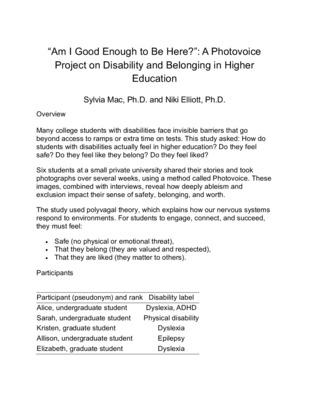
“Am I Good Enough to Be Here?”: A Photovoice Project on Disability and Belonging in Higher Education (Plain Language Summary)
Sylvia Mac Ph.D. and Niki Elliott Ph.D.
Many college students with disabilities face invisible barriers that go beyond access to ramps or extra time on tests. This study asked: How do students with disabilities actually feel in higher education? Do they feel safe? Do they feel like they belong? Do they feel liked?
Six students at a small private university shared their stories and took photographs over several weeks, using a method called Photovoice. These images, combined with interviews, reveal how deeply ableism and exclusion impact their sense of safety, belonging, and worth.
The study used polyvagal theory, which explains how our nervous systems respond to environments. For students to engage, connect, and succeed, they must feel: safe (no physical or emotional threat), that they belong (they are valued and respected), and that they are liked (they matter to others).
Printing is not supported at the primary Gallery Thumbnail page. Please first navigate to a specific Image before printing.