
-
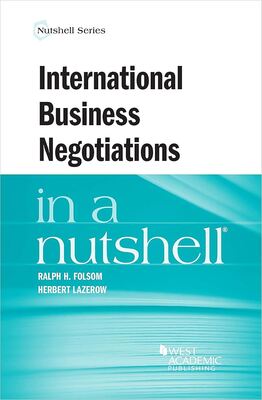
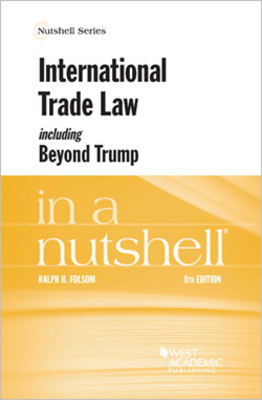
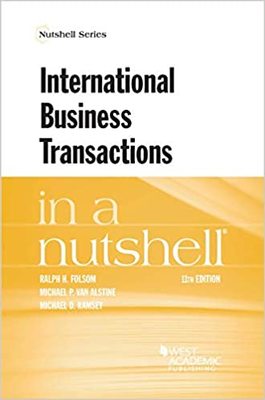
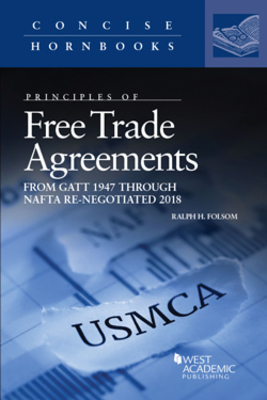
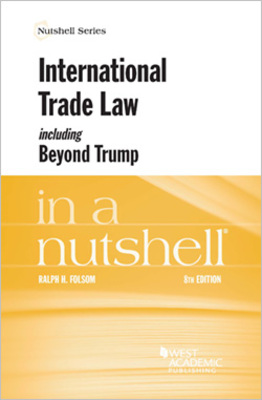
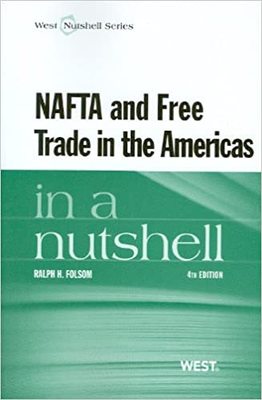
International trade law: including Trump and trade in a nutshell
Ralph H. Folsom
This Nutshell focuses on customs and tariff law, regulation of imports and exports, trade remedies against import competition, foreign corrupt practices, technology transfers, free trade agreements and customs unions, the law of the World Trade Organization, and President Trump and his trade policies.
-
You Don't Own Me: How Mattel v. MGA Entertainment Exposed Barbie's Dark Side
Orly Lobel
The battle between Mattel, the makers of the iconic Barbie doll, and MGA, the company that created the Bratz dolls, was not just a war over best-selling toys, but a war over who owns ideas. When Carter Bryant began designing what would become the billion-dollar line of Bratz dolls, he was taking time off from his job at Mattel, where he designed outfits for Barbie. Later, back at Mattel, he sold his concept for Bratz to rival company MGA. Law professor Orly Lobel reveals the colorful story behind the ensuing decade-long court battle. This entertaining and provocative work pits audacious MGA against behemoth Mattel, shows how an idea turns into a product, and explores the two different versions of womanhood, represented by traditional all-American Barbie and her defiant, anti-establishment rival--the only doll to come close to outselling her. In an era when workers may be asked to sign contracts granting their employers the rights to and income resulting from their ideas--whether conceived during work hours or on their own time--Lobel's deeply researched story is a riveting and thought-provoking contribution to the contentious debate over creativity and intellectual property.
-
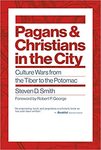
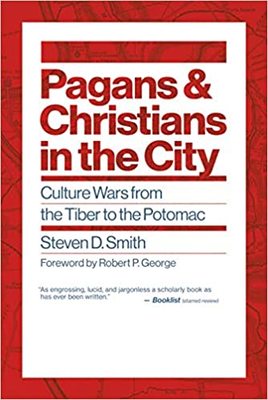
Pagans and Christians in the city: culture wars from the Tiber to the Potomac
Steven D. Smith
Traditionalist Christians who oppose same-sex marriage and other cultural developments in the United States wonder why they are being forced to bracket their beliefs in order to participate in public life. This situation is not new, says Steven D. Smith: Christians two thousand years ago faced very similar challenges.
Picking up poet T. S. Eliot’s World War II–era thesis that the future of the West would be determined by a contest between Christianity and “modern paganism,” Smith argues in this book that today’s culture wars can be seen as a reprise of the basic antagonism that pitted pagans against Christians in the Roman Empire. Smith’s Pagans and Christians in the City looks at that historical conflict and explores how the same competing ideas continue to clash today. All of us, Smith shows, have much to learn by observing how patterns from ancient history are reemerging in today’s most controversial issues.
-
Questions & Answers: Bankruptcy
Mary Jo Wiggins
The Second Edition of Questions & Answers: Bankruptcy builds on the excellence, scope, and usability of the First Edition. The book contains 398 multiple-choice and short-answer questions with clear, detailed answers for each question, along with a two-hour, comprehensive practice exam, also with detailed, step-by-step explanations. The questions and answers cover the major chapters of the Bankruptcy Code (7, 11, 12, and 13) and include expertly designed questions on consumer bankruptcy, corporation liquidation, corporate reorganization, family farms, bankruptcy procedure, and many other issues.
Specific coverage includes: the structure of the Code, bankruptcy eligibility, property of the estate and exclusions, the automatic stay, claims resolution and distribution, administrative powers, executory contracts, avoiding powers, preferences and exceptions, strong-arm powers, fraudulent transfers, recovery of avoided transfers, discharge and dischargeability, exemptions, means-testing, redemption, reaffirmation, reorganization plans in both chapter 11 and chapter 13, plan confirmation, advanced issues in chapter 11, non-discrimination, lien avoidance, and revocation of plan confirmation.
A robust mix of both practical and policy-oriented questions, the second edition of Questions & Answers: Bankruptcy is completely updated to incorporate the latest revisions to the Bankruptcy Code and Rules, as well as recent case law developments. The book is an ideal study aid for students taking introductory and advanced bankruptcy courses, and is perfect for practitioners seeking bankruptcy certification.
-
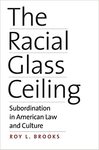
The Racial Glass Ceiling: Subordination in American Law and Culture
Roy L. Brooks
Why does racial equality continue to elude African Americans even after the election of a black president? Liberals blame white racism while conservatives blame black behavior. Both define the race problem in socioeconomic terms, mainly citing jobs, education, and policing. Roy Brooks, a distinguished legal scholar, argues that the reality is more complex. He defines the race problem African Americans face today as a three-headed hydra involving socioeconomic, judicial, and cultural conditions. Focusing on law and culture, Brooks defines the problem largely as racial subordination: 'the act of impeding racial progress in pursuit of nonracist interests.' Racial subordination is little understood and under acknowledged, yet it produces devastating and even deadly racial consequences that affect both poor and socioeconomically successful African Americans. Brooks addresses a serious problem, in many ways more dangerous than overt racism, and offers a well reasoned solution that draws upon the strongest virtues America has exhibited to the world.
-
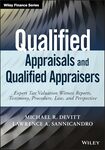
Qualified Appraisals and Qualified Appraisers: Expert Tax Valuation Witness Reports, Testimony, Procedure, Law, and Perspective
Michael Devitt and Lawrence A. Sannicandro
Qualified Appraisers and Qualified Appraisals provides clarification on complex IRS guidelines, and offers solutions and insight that can help appraisers adhere to the latest Treasury Regulations concerning appraisals submitted in tax matters. From the Uniform Standards of Professional Appraisal Practice to IRS regulations, this book explores the body of law that has arisen around the production of “qualified appraisals” that the government and courts will accept. The discussion covers estate, gift, charitable contribution, income taxes, and more, with expert guidance on the interpretation and application of complex regulations. As appraisers often are called upon to provide expert testimony in court, this book shares effective methods including the novel “hot-tubbing” technique that eliminates the appearance of bias in favor of a less-adversarial discussion. Cases are dissected as they relate to application of existing appraisal laws, and the companion website features checklists, references, and additional cases as they become available.
The IRS regulations on qualified appraisers and qualified appraisals have sparked a storm of controversy, and have raised more questions than they have answered. This book acknowledges the problems and offers solutions to help appraisers produce work the IRS and courts will accept.
- Understand the laws surrounding “qualified appraisals” and “qualified appraisers”
- Gain insight on testifying as an expert, including new techniques
- Explore solutions to common issues the IRS raises with respect to qualified appraisals and qualified appraisers
- Examine cases that illustrate the nuances of appraisal law application
In order for an appraisal to satisfy the government, an appraisal must be performed by a “qualified appraiser” specific for the type of property in question. This broad statement leaves much to question, but Qualified Appraisers and Qualified Appraisals provides the answers appraisers need to comply with the law and produce work that meets the latest standards.
-
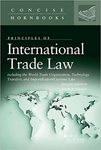
Principles of International Trade Law: including the World Trade Organization, Technology Transfers, and Import/Export/Customs Law
Ralph Folsom
The essentials of international trade law/the WTO -- United States trade and tariff law -- Customs classification, valuation, and origin -- Antidumping duties -- Subsidies and countervailing duties -- Safeguard proceedings, trade adjustment assistance -- U.S. nontariff trade barriers and disputes -- Counterfeit and IP infringing imports -- Gray market imports -- United States export controls -- United States boycott laws -- United States anti-boycott law -- Foreign corrupt practices -- Unilateral U.S. Section 301 trade sanctions -- Technology transfers across borders -- An early commentary on trade policy under the Trump administration
-
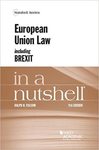
European Union law including Brexit in a nutshell
Ralph H. Folsom
Old Europe -- New Europe, BREXIT -- Law-making in Europe -- Litigating European law -- Free movement -- Internal policies -- External trade and foreign investment law -- Business competition (Antitrust) Law
-
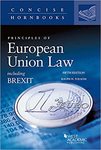
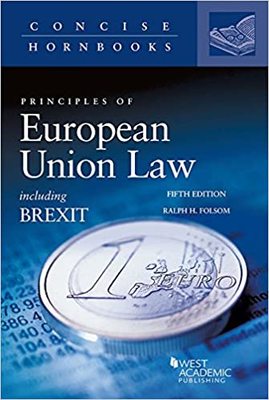
Principles of European Union law: including BREXIT
Ralph H. Folsom
This advanced, detailed guide provides a comprehensive review of laws and policies of the European Union. Chapter 1 looks at the history of the European Union including BREXIT. Chapters 2 and 3 focus on critical EU processes behind lawmaking and litigation. Chapter 4 examines the free movement of goods, services, capital, and people (including mass migration), while Chapter 5 covers a broad selection of internal EU legal regimes concerning business law, ranging from taxation to agriculture. The EU's complex external trade, foreign investment and customs law is analyzed in Chapter 6. Antitrust law and regulation of business agreements are covered in Chapter 7. The Treaty on European Union and the Treaty on the Functioning of the European Union, along with the EU Charter of Fundamental Freedoms, are reproduced in Appendices
-
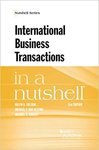
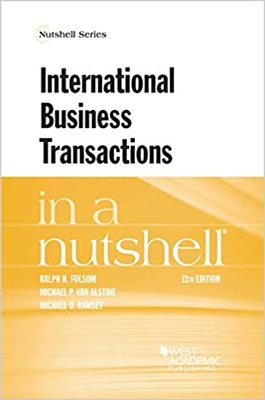
Principles of International Business Transactions
Ralph H. Folsom, Michael W. Gordon, Michael P. Van Alstine, and Michael D. Ramsey
This book is designed to provide a deeper analysis of the subject matter for users of the authors' popular problem-oriented coursebook, International Business Transactions, and its three spin-offs: Contracting Across Borders, Trade and Economic Relations, and Foreign Investment Law, as well as for legal practitioners as a resource for research and analysis.
-
California civil procedure
Walter W. Heiser
Written for those upper-level law students who intend to practice law in California, this casebook emphasizes those aspects of California Civil Procedure that are significantly different that the federal system. California Civil Procedure has several goals. First, upon completion of a course using this casebook, students will be prepared to competently conduct civil litigation in the California courts. Furthermore, this book examines the procedural advantages and disadvantages of litigating in the California courts as opposed to federal courts so new lawyers can make an informed choice between filing an action is one system or the other. This casebook also provides students with a brief summary of the federal or general position on each major topic as a basis of comparison and as a review of first-year civil procedure.
-
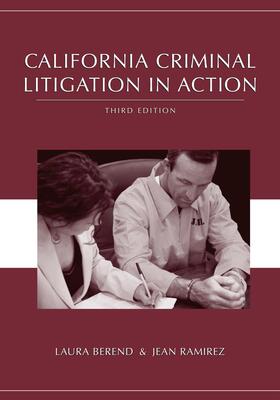
California Criminal Litigation in Action
Laura Berend and Jean Ramirez
The third edition of California Criminal Litigation in Action tracks a criminal case from arrest through sentencing. Students learn about criminal litigation by participating in simulation exercises at various stages of the case. For example, students participate in bail review hearings, preliminary hearings, grand jury proceedings, motion hearings, the exchange of discovery, plea negotiations, and sentencing hearings. The book also includes drafting exercises (motions and sentencing memoranda) as well as fact-management/fact-development exercises (evidence marshaling, interviewing, and counseling).
This book is vital to students and others planning a career in California criminal litigation. It ambitiously strives to create practice-ready law students and new attorneys. While the book is explicitly focused on criminal litigation in the California trial courts, it is readily adaptable for use in other jurisdictions. Instructors will find the teaching materials to be both comprehensive and easy to incorporate.
-
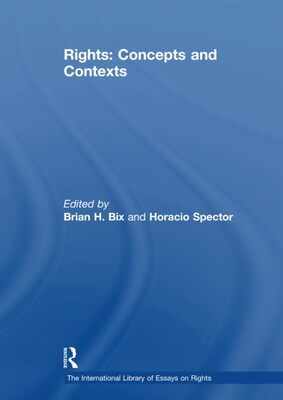
Rights: Concepts and Contexts
Brian Bix and Horacio Spector
Rights: Concepts and Contexts contains the central works of recent scholarship on the nature of rights, with contributions by some of the most prominent contemporary theorists in moral, legal, and political philosophy, including Joseph Raz, Robert Alexy, Jeremy Waldron, Morton Horwitz, Stephen Darwall, Margaret Gilbert, David Lyons, and Aharon Barak. With approaches ranging from the political to the historical, and from the analytical to the critical, this collection touches on the major conceptual and practical questions of this important field: what is the nature and grounding of human rights? How should conflicts of rights best be analyzed? Are rights best understood in terms of choice, benefits, or some hybrid of the two? What are the connections between rights and duties, and between rights and justice? The collection also offers useful introductions to emerging issues in rights theory such as the purported bipolarity of rights.
-
Foreign Investment Law in a Nutshell
Ralph H. Folsom
Foreign investment is commonplace around the globe. Inbound and outbound foreign investment flows are massive as home country investors merge or acquire existing businesses or establish new companies in host countries. Investors purchase stocks and bonds on foreign exchanges, and sometimes foreign sovereign debt. The sums involved are staggering. Unlike international trade law governed significantly by the World Trade Organization, no uniform body of foreign investment law exists. Hence foreign investment law is predominantly national in character and varies considerably. Foreign Investment Law in a Nutshell reviews the law, practice, regulation and dispute settlement of foreign investment. Following the Nutshell tradition, citations are minimized creating a book that reads easily. Students, academics, lawyers, government officials and people in business will find it useful. After introducing entry and operational control patterns found primarily in the developing world, notably expropriation, this Nutshell focuses on investing in China, Europe and North America as case studies. It also explores the multitude of foreign investment treaties (BITs) and the dynamic law of NAFTA on foreign investment. The controversial foreign investor-host state arbitration systems for disputes established under BITs and NAFTA are closely examined.
-
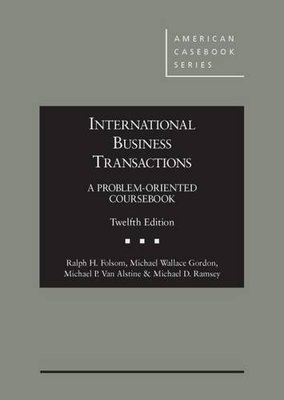
International business transactions: a problem-oriented coursebook
Ralph H. Folsom, Michael W. Gordon, Michael P. Van Alstine, and Michael D. Ramsey
-
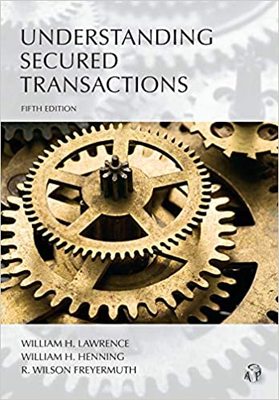
Understanding secured transactions
William H. Lawrence, William H. Henning, and R. Wilson Freyermuth
-

Understanding civil procedure
Walter W. Heiser, Gene R. Shreve, Peter Raven-Hansen, and Charles Gardner Geyh
-

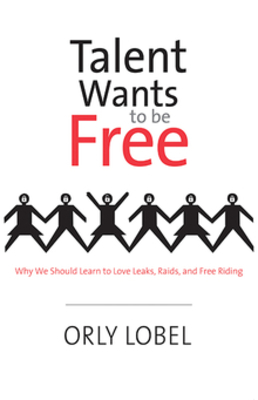
Talent Wants to Be Free: Why We Should Learn to Love Leaks, Raids, and Free Riding
Orly Lobel
This timely book challenges conventional business wisdom about competition, secrecy, motivation, and creativity. Orly Lobel, an internationally acclaimed expert in the law and economics of human capital, warns that a set of counterproductive mentalities are stifling innovation in many regions and companies. Lobel asks how innovators, entrepreneurs, research teams, and every one of us who experiences the occasional spark of creativity can triumph in today's innovation ecosystems. In every industry and every market, battles to recruit, retain, train, energize, and motivate the best people are fierce. From Facebook to Google, Coca-Cola to Intel, JetBlue to Mattel, Lobel uncovers specific factors that produce winners or losers in the talent wars. Combining original behavioral experiments with sharp observations of contemporary battles over ideas, secrets, and skill, Lobel identifies motivation, relationships, and mobility as the most important ingredients for successful innovation. Yet many companies embrace a control mentality--relying more on patents, copyright, branding, espionage, and aggressive restrictions of their own talent and secrets than on creative energies that are waiting to be unleashed. Lobel presents a set of positive changes in corporate strategies, industry norms, regional policies, and national laws that will help talent flow, creativity, and growth. This vital and exciting book reveals why everyone wins when talent is set free. In 2016, Lobel was invited to the White House to present the ideas of Talent Wants to be Free. As a result of that meeting, President Obama issued a Call-for-Action to rethink the dynamics of the talent wars. This is an essential read for anyone interested in leadership, markets, competition, entrepreneurship, creativity and innovation.
-
Originalism and the Good Constitution
John O. McGinnis and Michael Rappaport
Originalism holds that the U.S. Constitution should be interpreted according to its meaning at the time it was enacted. In their innovative defense of originalism, John McGinnis and Michael Rappaport maintain that the text of the Constitution should be adhered to by the Supreme Court because it was enacted by supermajorities—both its original enactment under Article VII and subsequent Amendments under Article V. A text approved by supermajorities has special value in a democracy because it has unusually wide support and thus tends to maximize the welfare of the greatest number.
The authors recognize and respond to many possible objections. Does originalism perpetuate the dead hand of the past? How can following the original meaning be justified, given that African Americans and women were excluded from the enactment of the Constitution in 1787 and many of its subsequent Amendments? What is originalism’s place in interpretation of the Constitution, when after two hundred years there is so much non-originalist precedent?
A fascinating counterfactual they pose is this: had the Supreme Court not interpreted the Constitution so freely, perhaps the nation would have resorted to the Article V amendment process more often and with greater effect. Their book will be an important contribution to the literature on originalism, which is now the most prominent theory of constitutional interpretation.
-
"One L of a Year": How to Maximize Your Success in Law School
Leah Christensen
Many books give law students advice about how to navigate through their first year of law school. This book strives to be something different. The purpose of "One L of a Year" is to focus on the reading, studying and testing strategies used by the most successful law students. This book is more than advice―it is a learning guide based upon empirical research and statistical correlations between law student learning and their law school GPAs.
Most importantly, this book attempts to show you what high-ranking law students have done to achieve success during their first year. It's one thing to read about how to take a law school essay exam―it's quite another thing to see examples of student essays, outlines, legal memoranda, and multiple choice questions. With drive and determination, most students can get through law school. However, "One L of a Year" gives you the research-based skills to maximize your own success.
Printing is not supported at the primary Gallery Thumbnail page. Please first navigate to a specific Image before printing.