
-
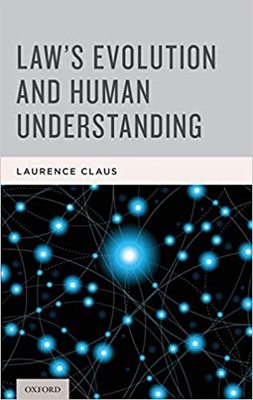
Law's Evolution and Human Understanding
Laurence Claus
When should we follow the law? How can we know what law's words mean? What is law? Law's Evolution and Human Understanding presents fresh and surprising answers to these questions. In an account alive with the stories of our shared human history, Laurence Claus explains why we should discard the old idea that legal rules tell us what to do, and instead see law as a system of sayings that evolves among humans to help us better understand each other. When driving on public roads, when buying and selling, and in countless other aspects of our work and play, we depend on law to let us know what other people are likely to do and to expect of us. Through fast-paced pages of anecdote and argument, Law's Evolution and Human Understanding explains the revolutionary consequences of seeing law as truly what Oliver Wendell Holmes called it: systematized prediction. The book reveals how this vision of law can transform our thinking about the way we make moral decisions, about the way we read law, and about many other ways that law affects our lives.
-

International trade and economic relations in a nutshell
Ralph H. Folsom, Michael W. Gordon, John A. Spanogle, and Michael P. Van Alstine
-
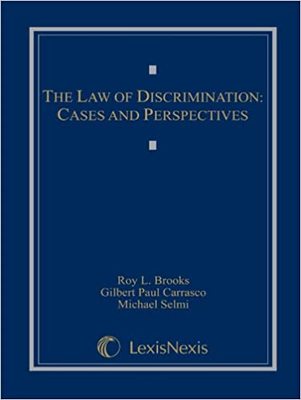
The Law of Discrimination: Cases and Perspective
Roy L. Brooks, Gilbert Paul Carrasco, and Michael Selmi
This casebook introduces students to discrimination cases and doctrine in the United States. Authors Brooks (U. of San Diego School of Law), Carrasco (Willamette U.), and Selmi (George Washington U. School of Law) have sought to include a diversity of perspectives that underpin or challenge the canon. The material covers discrimination based on race, of course, but also includes coverage of protection for women, language minorities, older workers, and the disabled, as well as consideration of issues connected to affirmative action policies. In addition to the above, chapters also discuss constitutional tort cases and discrimination in education, public accommodations, housing, employment, and the administration of justice.
-
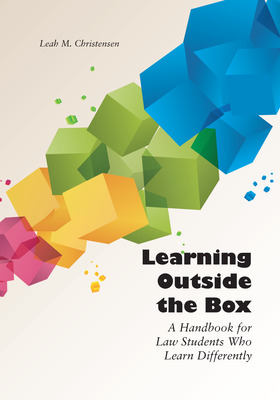
Learning Outside the Box: A Handbook for Law Students Who Learn Differently
Leah Christensen
More law students than ever before come to law school having been diagnosed with a learning disability. The purpose of this book is to provide research-based learning strategies for law students who learn differently. If you are a student who has been diagnosed with a learning disability or if you simply have a unique learning style, you may need to outline differently, read cases differently, and approach law school in a more active, engaged, and efficient manner. This book offers learning strategies grounded in empirical research to help law students who learn differently maximize their academic success.
-
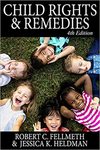
Child Rights & Remedies
Robert C. Fellmeth
Child Rights and Remedies provides a comprehensive examination of how United States law and policy affects the lives and futures of children. This law school text covers a broad spectrum of major cases, statutes, and relevant empirical evidence that illustrate how children are faring in light of how our legal and political systems function. Uniquely among juvenile law texts, Child Rights and Remedies begins by delving into the underlying political context of available remedies for children, highlighting the special status of children – a status that does not always work to their advantage, particularly vis a vis special interests with far greater access to and influence over all branches of government. Within this context, the text explores the barriers to developing policy favorable to children with regard to poverty, education, health, special needs, child care, child abuse, juvenile delinquency, reproductive rights, custody and civil liberties. This updated edition also explores the timely issue of immigration and the rights of children, a politically charged area of law and policy deeply impacting vast numbers of children. In addition to the almost 200 legal references that cover major federal and influential state court decisions, the text contains probing questions and commentary designed to challenge the reader to consider diverse points of view and construct compelling legal arguments. Broad analysis of constitutional law and civil procedure complements the child-specific content, making Child Rights and Remedies a valuable tool for any student of the law. For those concerned about the well-being of children in this country and beyond, this text is an essential guide for powerfully advocating for their rights and representing their interests.
-
International Law in the U.S. Supreme Court
David L. Sloss, Michael D. Ramsey, and William S. Dodge
From its earliest decisions in the 1790s, the U.S. Supreme Court has used international law to help resolve major legal controversies. This book presents a comprehensive account of the Supreme Court's use of international law from the Court's inception to the present day. Addressing treaties, the direct application of customary international law, and the use of international law as an interpretive tool, the book examines all the cases or lines of cases in which international law has played a material role, showing how the Court's treatment of international law both changed and remained consistent over the period. Although there was substantial continuity in the Supreme Court's international law doctrine through the end of the nineteenth century, the past century was a time of tremendous doctrinal change. Few aspects of the Court's international law doctrine remain the same in the twenty-first century as they were two hundred years ago.
-
The disenchantment of secular discourse
Steven D. Smith
Prominent observers complain that public discourse in America is shallow and unedifying -- This debased conditions often attributed to, among other things, the resurgence of religion in public life. Steven D. Smith argues that this diagnosis has the matter backwards: it is not primarily religion but rather the strictures of secular rationalism that have drained our modern discourse of force and authenticity. Thus Rawlsian public reason filters appeals to religion or other comprehensive doctrines out of public deliberation. But these restrictions have the effect of excluding our deepest normative commitments, virtually assuring that the discourse will be shallow. Furthermore, because we cannot defend our normative positions without resorting to convictions that secular discourse deems inadmissible, we are frequently forced to smuggle in those convictions under the guise of benign notions such as freedom and equality. Smith suggests that this sort of smuggling is pervasive in modern secular discourse. He shows this by considering a series of controversial, contemporary issues, including the Supreme Court's assisted-suicide decisions, the harm principle, separation of church and state, and freedom of conscience. He concludes by suggesting that it is possible and desirable to free public discourse of the constraints associated with secularism and public reason.
-
Crime and Culpability: A Theory of Criminal Law
Larry Alexander, Kimberly Kessler Ferzan, and Stephen J. Morse
This book presents a comprehensive overview of what the criminal law would look like if organized around the principle that those who deserve punishment should receive punishment commensurate with, but no greater than, that which they deserve. Larry Alexander and Kimberly Kessler Ferzan argue that desert is a function of the actor's culpability and that culpability is a function of the risks of harm to protected interests that the actor believes he is imposing and his reasons for acting in the face of those risks. The authors deny that resultant harms, as well as unperceived risks, affect the actor's desert. They thus reject punishment for inadvertent negligence as well as for intentions or preparatory acts that are not risky. Alexander and Ferzan discuss the reasons for imposing risks that negate or mitigate culpability, the individuation of crimes, and omissions. They conclude with a discussion of rules versus standards in criminal law and offer a description of the shape of criminal law in the event that the authors' conceptualization is put into practice
-
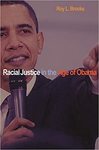
Racial Justice in the Age of Obama
Roy L. Brooks
With the election of Barack Obama as the first black president of the United States, the issue of racial justice in America occupies center stage. Have black Americans finally achieved racial justice? Is government intervention no longer required? Racial Justice in the Age of Obama considers contemporary civil rights questions and theories, and offers fresh insights and effective remedies for race issues in America today. While there are now unprecedented opportunities for talented African Americans, Roy Brooks shows that lingering deficiencies remain within the black community. Exploring solut
-
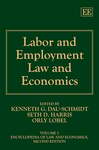
Labor and Employment Law and Economics
Kenneth G. Dau-Schmidt, Seth D. Harris, and Orly Lobel
The economic analysis of labor and employment law is a bold effort to apply economic theory to explain important empirical facts about the regulation of the employment relationship and to provide positive predictions and normative analyses that are useful to policy-makers. This book draws together 24 chapters, by leading scholars in the field, summarizing the important theoretical and empirical work that has been done to date on a wide spectrum of labor and employment law topics including: regulating employment contracts, unions, collective bargaining, minimum wages, health insurance, executive pay, workers’ compensation, unemployment, occupational health and safety, discrimination, needs of families, training and slave labor, to name but a few.
-
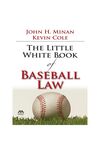
The Little White Book of Baseball Law
John H. Minan and Kevin Cole
From free agency and scalping tickets, to the infamous Bartman Ball, this book has it all. The game of baseball has often resulted in brawls, both on the field and in the courtroom, and from the 1890's on, much of what baseball is today has been shaped by the law. In eighteen chapters, this eye-opening book discusses cases that involved rules of the game, new stadium construction, ownership of baseball memorabilia, injured spectators, television contracts, and much more.
-
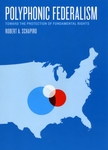
Polyphonic Federalism: Toward the Protection of Fundamental Rights
Robert Schapiro
The relationship between the states and the national government is among the most contested issues in the United States. And questions about where power should reside, how decisions should be made, and how responsibility should be allocated have been central to the American experiment in federalism. In Polyphonic Federalism, Robert A. Schapiro defends the advantages of multiple perspectives in government, arguing that the resulting “polyphony” creates a system that is more efficient, democratic, and protective of liberties.
This groundbreaking volume contends that contemporary views of federalism are plagued by outmoded dualist notions that seek to separate state and federal authority. Instead, Schapiro proposes a polyphonic model that emphasizes the valuable interaction of state and federal law, one that more accurately describes the intersecting realities of local and national power. Through an analysis of several legal and policy debates, Polyphonic Federalism demonstrates how a multifaceted government can best realize the potential of federalism to protect fundamental rights.
-
Autonomy and Rights: The Moral Foundations of Liberalism
Horacio Spector
Moral and political theorists who espouse egalitarianism and Marxism tend to assume that it is extremely hard, if not impossible, to put forward an original and plausible moral justification of classical liberalism. Horacio Spector is concerned to build just such a justification. He reconstructs and then criticizes a familiar approach to the moral foundations of classical liberalism which rests on the maximization of negative freedom, and then frames an alternative theory centered in the obligation to protect positive freedom. In so doing, he parts company not only with utilitarianism and contractarianism, but also with the theory of natural rights. Among the topics he discusses are the concepts of negative and positive freedom, the notion of a moral right, the connection between positive freedom and personal autonomy, the axiological uniqueness of each human being, and the agent-relativity of moral reasons.
-
Atonement and Forgiveness: A New Model for Black Reparations
Roy L. Brooks
Roy Brooks reframes one of the most important, controversial & misunderstood issues of modern times in this reassessment of the debate on black reparation. He shifts the focus from the backward-looking question of compensation for victims to a more forward-looking opportunity for racial reconciliation
-
Teacher's manual to accompany international business transactions: a problem-oriented coursebook
Ralph H. Folsom, Michael W. Gordon, and John A. Spanogle
Printing is not supported at the primary Gallery Thumbnail page. Please first navigate to a specific Image before printing.